
What Families Need to Know About Video Games and Well-Being
Most messages parents hear about games are built on alarm rather than evidence. Explore what the research actually shows, plus a set of practical tools to raise good gamers.

Video games are now a central part of family life. More than 3 billion people play worldwide. The 2025 Essential Facts report from the Entertainment Software Association stated that 83% of U.S. households have played at least one video game device in the last 12 months. But the conversation around gaming is dominated by fear, and parents looking for clear, reliable guidance struggle to find it.
The white paper, ‘What Families Need to Know About Video Games and Well-Being,’ from Games for Change Research Director Dr. Rachel Kowert, weighs that conversation against the evidence, drawing on an analysis of nearly 200,000 articles and posts across 15 countries, and gives families a grounded way to think about the games in their kids' lives. See what the research actually says, and download the paper plus hands-on resources: a family conversation guide, a family code of conduct, and the SPACE framework.
Companion Resources
-
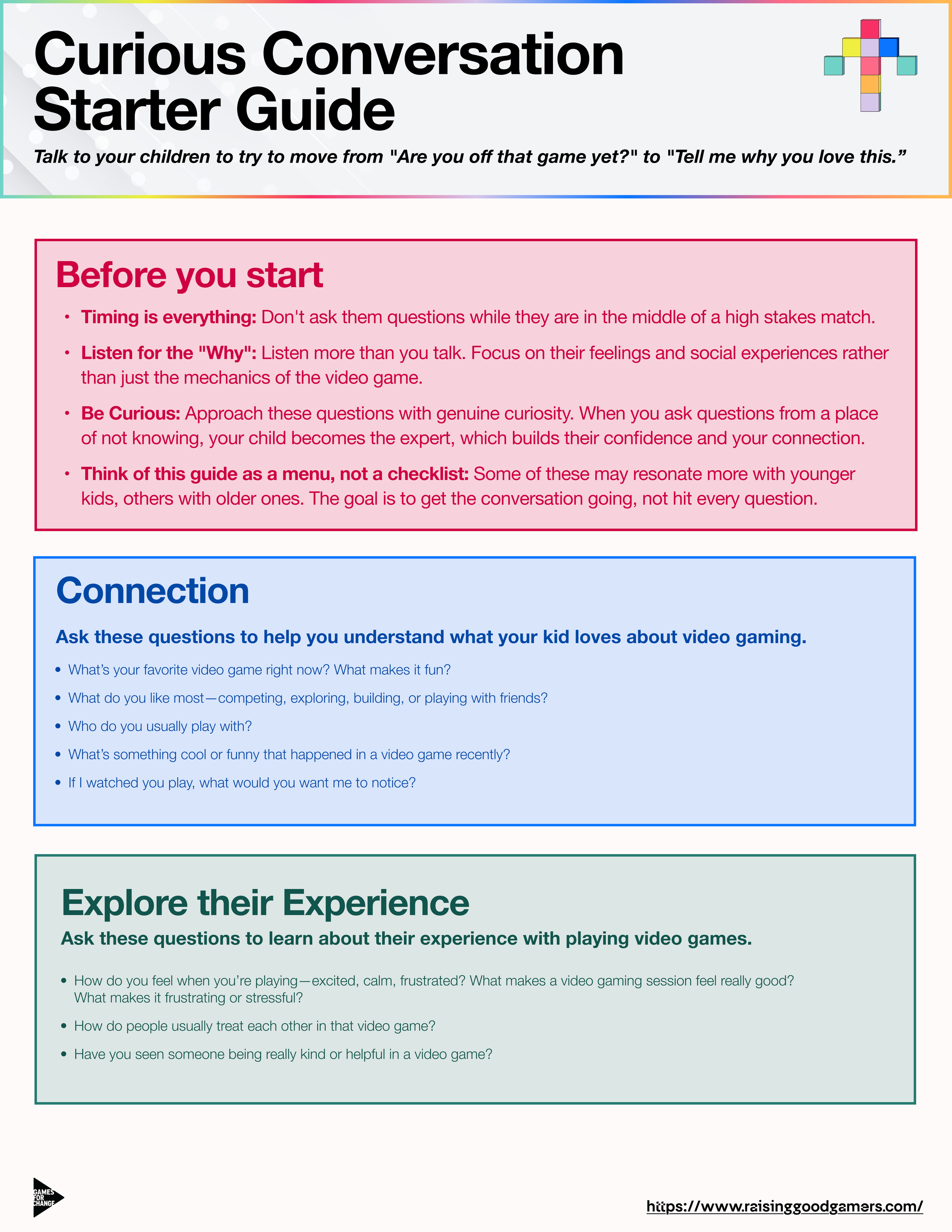
Prompts for talking with your kids about the video games they play.
-
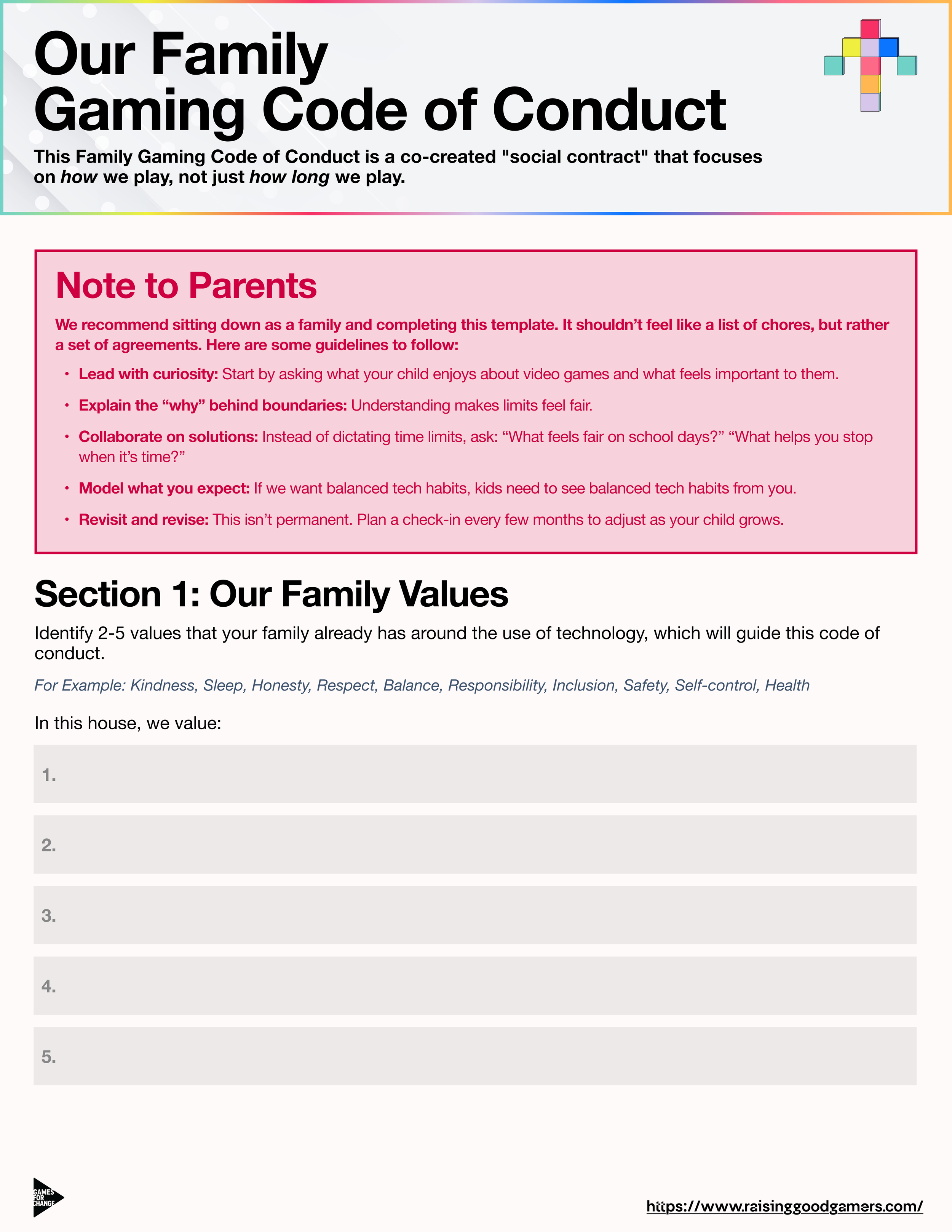
A template for setting shared household video gaming expectations.
-
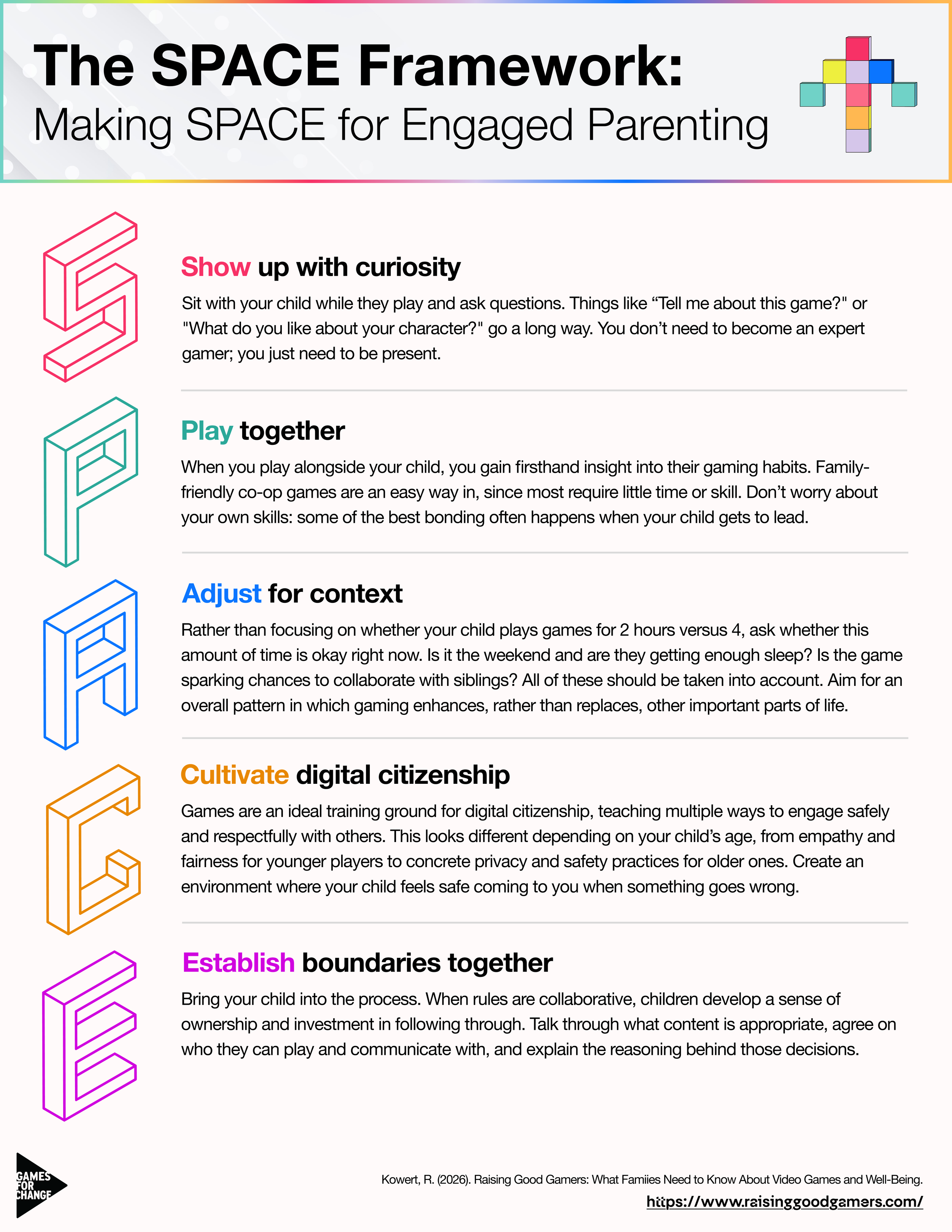
A framework for learning more about the video games you kids love.
Raising Good Gamers is a Games for Change initiative that helps parents and caregivers navigate the role of video games in young people's lives with confidence. Through evidence-based research, practical resources, workshops, and expert insights, we promote balanced conversations about healthy gameplay, digital well-being, and the positive potential of play.
With support from Tencent, Raising Good Gamers offers workshops, webinars, educational resources, and community programs that help families foster healthy gaming habits and digital well-being.